Board
Board
 Strategy
 Music
Music
 Sports
 Simulator
 Puzzle
 Role Playing
 Card
Card
 Racing
 Casual
 Adventure
 Action
 Arcade
 Health & Fitness
 Finance
 Education
 Sports App
 Personalization
 Comics
 Productivity
 Books & Reference
 Art & Design
 LifeStyle
 Social
 Business
 Communication
 Tools
Tools
 Music & Audio
 Video Players & Editors
 Entertainment
 Photography

Dive into a detailed setup for Pojavlauncher APK. Learn to run complex Java modpacks, map virtual keys, and fix annoying Exit Code 1 errors effortlessly.
| Name | Pojavlauncher | |
| Updated | 2026-05-15 | |
| Compatible with | Android 5.0 and up | |
| Last version | 1.0 | |
| Size | 132.3 MB |
| MOD | Latest Version | |
| Category | Tools | |
| Developer | artdeell | |
| Price | Free | |
| Google Play Link |
Pojavlauncher APK helps me run a real Minecraft Java world right on my Android phone. During my deep testing process, I noticed that this launcher handles the complex logic algorithms of the PC version exceptionally well, fully satisfying players' needs for configuration customization and deep modpack loading.
Many mobile users seek this alternative because the official mobile port features restrictive gameplay limits and lacks compatibility with Java-exclusive custom asset architectures. When I explore a fully loaded Java world on a handheld setup, the structural complexity of world generation runs smoothly once initialization finishes.
To understand how this framework translates desktop code into a mobile environment, we should examine the system upgrades deployed in the most recent core build.
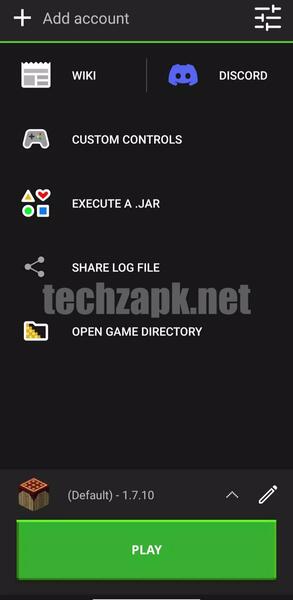
The Pojavlauncher latest update version optimizes performance through a major overhaul in the core library system. The developers cleaned up redundant code, significantly reducing initial startup times when loading complex desktop graphic files.
I noticed pre-integrated modern OpenJDK runtimes make the app instantly compatible with recent game versions, eliminating manual setup. The cache management system also reduces app crashes when characters move at high speeds across new map chunks.
Alongside foundational upgrades, new features that deeply intervene in gameplay are the deciding factors for the mobile experience.
This launcher's control and resource management system provides powerful customization capabilities, intervening deeply in the game's operational structure. Here is an analytical breakdown of each core feature mechanism from my real-world testing.
This feature lets players divide system resources directly using a RAM allocation slider. Actively isolating memory for the Java environment prevents performance interference from native background Android processes.
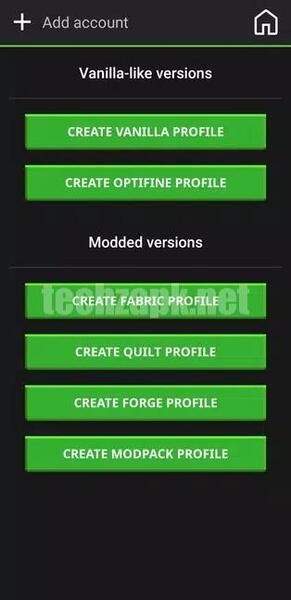
The tool integrates popular mod loader platforms like Forge, Fabric, and Quilt directly into the main menu. Players can install extension files immediately without manual extraction steps or messing with core directories.
The application provides optimized renderer options like Holy GL4ES for classic versions and LTW for modern ones. This diversity accurately translates desktop OpenGL commands into a graphic language compatible with mobile processors.
Players can freely build their control layout by creating custom buttons and mapping PC keyboard shortcuts onto the touchscreen. This architecture generates a controlmap.json profile, which is vital for executing fast combat combos.
The launcher allows quick storage and switching between official Microsoft accounts and offline local accounts. This lets users toggle easily between international multiplayer servers and independent offline survival worlds.
The built-in storage interface lets players copy texture packs, maps, or mods directly into the correct system folder. This utility utilizes direct access to standard Android storage permission directories, keeping the installation self-contained.
As a user, you can create multiple experience profiles linked to a specific game version and a distinct modpack. This setup ensures data integrity, letting you experiment with new playstyles without corrupting old survival worlds.
Flawless compatibility with automation mods helps players significantly shorten raw material gathering times in the blocky world. However, reducing this grind time can completely alter the game's original balance and survival challenge.
Each system feature mentioned above plays a crucial role in shaping the gameplay and controlling world balance. However, actual performance remains heavily dictated by your device's hardware specifications.
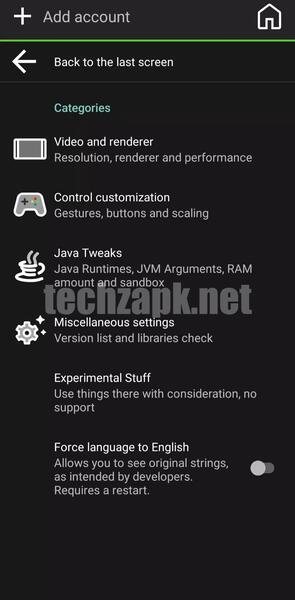
Frame rate stability when running a desktop game on mobile architecture depends heavily on technical configuration. On high-end processors, the application maintains a smooth frame rate in standard map areas during basic crafting activities.
For mid-range devices, actively lowering the graphic rendering resolution scaling is mandatory. Combining this tweak with the implementation of custom mobile Sodium engine patches helps maintain smoothness when moving through dense entity areas.
From these real-world performance metrics, we can analyze the core values and structural barriers affecting the depth of the experience.

When testing deep system configurations, users often run into initialization halts or abrupt crashes. Resolving these operational bottlenecks requires methodical adjustments to the internal game profiles.
Fixing Exit Code 1 crashes: This signals conflicts between mod files or runtime versions. Go to profile settings, match your version with the mod loader type, and clear old configuration folders.
Resolving asset loading freezes: When the app hangs mid-load, it typically stems from directory blocks. Ensure the app has complete system storage access permissions to read and write runtime files freely.
Tackling out-of-memory errors: Improper memory allocation causes instant crashes. Set the RAM slider precisely to half of your device’s physical capacity to maintain an optimal buffer for the background OS.
The outstanding advantage of this emulator tool is that it breaks down content boundaries between two different hardware platforms. Hardcore gamers can carry complex redstone-operated machinery systems everywhere without worrying about physics logic mismatches.
The biggest drawback lies in temperature pressure and high power consumption during operation. The phone's CPU and GPU run at full capacity continuously to translate Java instruction sequences, causing rapid overheating and battery drain without external cooling.
In terms of balance, bringing deep customization to mobile changes how you approach the game. When material gathering becomes too easy via supporting mods, the natural lifespan of the game shortens due to the loss of original challenge.
If the barriers of temperature or configuration tweaking complexity make you hesitate, the market still offers alternative solutions to consider.
When compared to the official mobile Bedrock version, I find this emulation solution to be more complex, yet it delivers a vastly deeper space for mods and mechanical customization. With other open-source projects now abandoned or outdated, this remains my top choice for fully experiencing Minecraft Java on a smartphone.
If you are looking for viable alternatives in this segment, I highly recommend considering the following options:
Minecraft Bedrock Edition: The official port smoothly optimized for mobile, though highly restrictive regarding mods.
Minetest: An open-source voxel world platform that supports deep modding and runs exceptionally light on hardware.
Survivalcraft 2: An open-world survival game featuring highly advanced technical and physics mechanics on Android.
My experience with Pojavlauncher APK confirms it is an indispensable tool for hardcore mobile gamers. If you are willing to spend time tweaking system configurations, it offers an uncompromised desktop-grade world in the palm of your hand. You can proceed with the Get the app for mobile phone process from reputable distribution sources to begin your journey and refer to advanced modpack setup guides to optimize your device.
1. Does the application support joining multiplayer PC version servers?
Yes, using a valid Microsoft account that owns the game license allows direct connections to global servers. However, connection stability depends entirely on the quality of your mobile network.
2. Why does the phone frequently crash back to the home screen while loading new world data?
This problem stems from allocating a RAM level that exceeds hardware limits, or conflicts between graphic mod packs. Lower the allocated RAM amount in the settings to fix this issue.
3. How to maintain a stable frame rate on mid-range configuration devices?
Select the default Holy GL4ES graphic renderer, reduce render distance to a minimum, and install popular graphic optimization mods to alleviate processing pressure on the graphics chip.


.jpg)
.jpg)